

logo

Lima-Rima Surgery

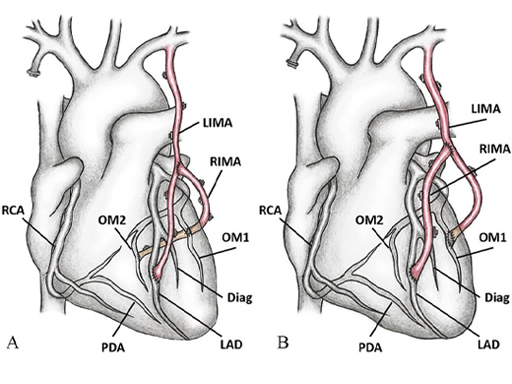
LIMA-RIMA Y (Left Internal Mammary Artery-Right Internal Mammary Artery Y) cardiac surgery is a type of coronary artery bypass grafting (CABG) that uses both the LIMA and RIMA arteries as blood vessel grafts to bypass blocked arteries in the heart, forming a Y-shaped configuration. This "total arterial revascularization" method is favored for its long-term patency rates and superior results compared to traditional vein grafts, providing a more durable blood supply to the heart.

How the LIMA-RIMA Y Graft Works

  • Grafting Material : The LIMA and RIMA are arteries located in the chest wall.
  • Y-Shaped Configuration: The grafts are arranged in a Y-shape, allowing the two arterial conduits to bypass multiple coronary artery blockages.
  • Bypass Target: The LIMA is typically used to bypass the Left Anterior Descending (LAD) artery and its branches, while the RIMA is used to bypass other coronary arteries, such as the marginal (OM) or Posterior Descending Artery (PDA).
  • Improved Blood Flow: The goal is to create a new, healthy route for blood to reach the heart muscle, restoring optimal blood flow.

Benefits of the LIMA-RIMA Y Technique

  • Superior Patency: Arterial grafts like the LIMA and RIMA have significantly higher long-term patency rates than vein grafts, which tend to fail within 7-10 years due to the pressure in the heart.
  • Increased Durability: The LIMA-RIMA Y bypass provides a robust and long-lasting blood supply to the heart.
  • Total Arterial Revascularization: The technique exclusively uses arterial grafts, avoiding the limitations of traditional vein grafts.

Who is a Candidate?

This procedure is generally suitable for patients suffering from severe Coronary Heart Disease (CHD) who would benefit from a more durable solution for improving blood flow to their heart.